
- LIFESTYLE
- FASHION
- FOOD
- ENTERTAINMENT
- EVENTS
- CULTURE
- VIDEOS
- WEB STORIES
- SPORTS
- GADGETS
- CAR & BIKE
- TRAVEL
- SOCIETY
- GALLERIES
- NORTH EAST
- INDULGE CONNECT

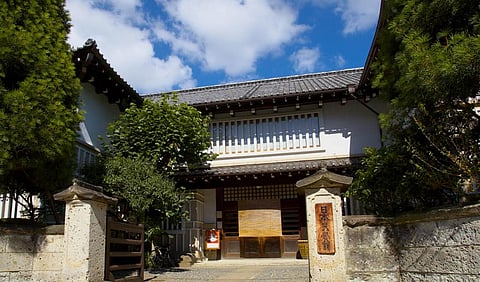
Those who know Japan would agree that the country’s beauty lies in its super advanced systems which make life easier for people; and their innate quality of never letting go of their culture and roots. This was further cemented in 1926 by Soetsu Yanagi who conceived the idea of preserving, displaying, and researching the ordinary and everyday through the Japan Folk Crafts Museum. The museum got form and space and opened in 1936 completing 90 years in 2026, but a century in ideology.
Be it common clay or graceful porcelains, pretty dolls or swords, for Japan, even the everyday is an art. In order to preserve their roots, Soetsu Yanagi, along with Kanjiro Kawai and Shoji Hamada, in 1925, coined the term ‘mingei’ which means folk crafts and the following year, the proposal of the museum came about. But what is more interesting is that Yanagi had been involved in the foundation of the Korean Folk Art Museum in 1924, through which the idea of a similar institution in Japan germinated and took form in the year 1936 when the museum buildings were established. Yanagi himself served as the first Director of the museum and today, it is amiably run by the fifth director.
Yanagi was not just the founder of a term but a practitioner of the mingei movement himself. Most of the 17,000+ artefacts that are now housed in the museum have been carefully collected by him and others, over the years. He kept in mind that the common crafts are accessible with the common people and started travelling to places like Tohoku, Okinawa, Kyushu and more to research, discover and accumulate the objects. Today, one can locate works from the ainu and Taiwan tribes; works of Tariki Hongan, the traditional tea ceremony visuals, works of early members of the Mingei Movement and more.
Interestingly, not only the exhibits but the museum structure itself was built in mind keeping the purpose of the museum at heart. In fact, Yanagi himself designed the Main Hall, getting local fabrics and woodworks that reflected his ideology of turning local through practical application.
Japanese craftsmanship is all about patience, minimal aesthetics, intricate carvings and utilitarian values, keeping traditional symbols and motifs in mind. To actually understand and value the beauty of the exhibits, one needs to spend time embracing them- their shapes, sizes, colours, makes, structures, forms, etchings, carvings and more. Right from the works of artists to the works of local craftsman including ceramics, woodwork, paintings, textile works and more, one can spot everything. And the best part is, the museum evolves with new exhibitions in changing times.
How to visit?
In order to visit the museum, it is ideal to check their official website regarding the opening days and time. It takes around 1500 yen (per adult) to gain entry into the museum. Even though physical disability assistance is provided, one needs to keep in mind that the museum came into existence when inclusivity wasn’t a coined term and hence there might be discomforts that are being worked upon.
For more updates, join/follow our WhatsApp, Telegram and YouTube channels.