
- LIFESTYLE
- FASHION
- FOOD
- ENTERTAINMENT
- EVENTS
- CULTURE
- VIDEOS
- WEB STORIES
- SPORTS
- GADGETS
- CAR & BIKE
- TRAVEL
- SOCIETY
- GALLERIES
- NORTH EAST
- INDULGE CONNECT
A new year always invites a small reckoning with time. 2026 arrived quietly, yet it carried with it a sudden jolt of memory. I can still see the turn of the millennium with startling clarity. The nervous excitement of 1999 giving way to 2000, the sense that we were stepping into something vast and unknown. To realise that moment now sits twenty-six years behind us feels both absurd and oddly tender.
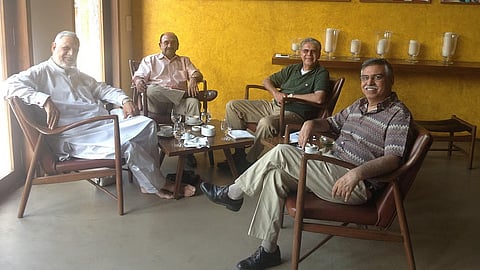
Last weekend in Delhi, I found myself revisiting that idea of time through food and friendship. I spent an afternoon with one of the city’s most devoted diners, Sunil Kant Munjal, whose relationship with Delhi can be measured not in years or addresses but in lunches. Since 2009, he and three close friends have met regularly for long, unhurried meals across the city. What began as a single lunch evolved into a disciplined, joyful ritual. Over fifteen years, they ate their way through seventy two restaurants, from old institutions to narrow staircases hiding kitchens known only to regulars. The result is Table for Four, a book born of a simple habit and sustained by deep affection. Four friends. One table. A city that kept pulling up a chair.
Reading the book, I was struck by how Delhi never behaved like a backdrop. It entered the room, hovered between courses, changed moods mid meal. The city became a presence in their friendship, sometimes indulgent, sometimes impatient, always alive. Munjal put it beautifully when he said that they did not just meet in Delhi, they moved through it together. One lunch at a time. They lingered long after plates were cleared, discovered unfamiliar neighbourhoods, returned to beloved favourites, and laughed at how seriously they could analyse a dish. Their dining trail slowly began to resemble a map of Delhi’s appetite. European cafés and Italian tables claiming one stretch of the journey, Indian and Asian kitchens anchoring another. All of it unfolding as the city itself kept changing. Traffic thickened, décor evolved, attitudes shifted, cuisines multiplied, even the table mats and loos told stories of time passing. Owners and chefs left behind more than flavours. They left points of view. That constant churn gave the group reasons to keep showing up until showing up itself became the bond.
Eating together, Munjal reflected, revealed things that conversation alone never could. A meal has a rhythm, a beginning, middle and end, and it shows people in motion. Around the table, personalities surfaced quietly. Who ordered adventurously and who stayed loyal to comfort. Who noticed every detail and who did not care at all. Who was gently generous, who cheerfully opinionated. Over years, the table also revealed intimate truths. Allergies, quirks, fussiness, the careful choreography of steering kitchens around constraints even before a tasting menu began. Disagreements stayed light because the stakes were deliciously low. Honesty remained intact because they paid their own bills, rotating responsibility so the experience stayed real and unvarnished.
As Delhi’s food landscape evolved, so did their friendship. They watched the city grow up in fast forward. In the early years, good often meant hotel dining rooms and a handful of established names. A city still learning to dine out with confidence. Then came a rebalancing. Indian food stepped forward boldly, from fine dining to everyday tables, and private kitchens began to matter as much as restaurants. Food became less about where you ate and more about who you ate with.

Experience began to trump cuisine labels. And then, inevitably, the pace softened. Life intervened. Meals became less frequent. Novelty lost its pull. In recent years, the noise has dropped. They found themselves choosing clarity, craft and memory. Places that did not need to shout because they knew exactly who they were.
Their friendship mirrored that arc. The core never shifted. Schoolboy banter lingered stubbornly. But it layered itself with family updates, work, the wider world, and the quiet recalibrations that come with senior adulthood. Delhi evolved around them. They evolved within it. What endured was the act of showing up.
Perhaps that is what makes Delhi such a muse. It is a city that rewards attention and loyalty. It grows alongside you if you let it. It remembers your habits, challenges your preferences, nudges you into new lanes while keeping old comforts within reach. To write about Delhi is to write about time passing through people, plates and places. And sometimes, as Table for Four reminds us, the simplest rituals become the most profound. Four friends, a long lunch, and a city that never quite leaves the table.