
- LIFESTYLE
- FASHION
- FOOD
- ENTERTAINMENT
- EVENTS
- CULTURE
- VIDEOS
- WEB STORIES
- SPORTS
- GADGETS
- CAR & BIKE
- TRAVEL
- SOCIETY
- GALLERIES
- NORTH EAST
- INDULGE CONNECT

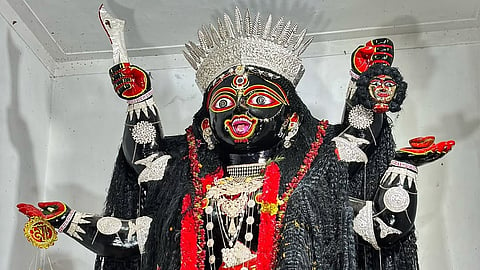
Shantipur doesn’t sleep on Bama Kali night. It thrums. You hear the drums before you see the crowd. And then, through the flicker of torches, she comes — Bama Kali, black and burning-eyed, perched on a bamboo platform, ready to move.
Every year during Diwali, when Kali Puja is also celebrated in many parts of eastern India, countless videos of this Bama dance go viral on social media. This 500-year-old tradition, which takes place in West Bengal's Santipur (in Nadia district) sees hundreds of people gathering together during the Kali visarjan. Most of the lights in the area are dimmed as the crowds carry mashal or torches as the towering Kali idol is made to dance.
Bama Kali dances on the shoulders of devotees carrying her. The men beneath her move like invisible strings are yanking them. Forget what you think of religious processions. This isn’t solemn. It’s chaotic, dangerous, and stunning. Sparks fly off the torches, drums hammer through your ribcage, and you realise this isn’t just about watching anymore.
The town of Santipur itself is quite steeped in tradition, and it's famous for the peaceful coexistence of both Baishanava and the Shakta cult of devotion. It's also considered the cradle of the Bhaki Cult propounded by Sri Chaitanya Dev.
They call the goddess “Bama” because she steps with her left foot ('bam' in Bengali is left) on Shiva — the rebel’s side, the untamed side also at par with the tantric rituals. This isn’t the goddess of calm wisdom. This is the one who tears down walls and drinks your fear.
The dance goes on until the idol reaches the river. When she finally dips into the water, it’s not a polite farewell that we witness during Maa Durga’s immersion. This feels like a surrender. The river hisses, the crowd howls, and just like that, the goddess is gone.
There are multiple myths and tales of folklore associated with the Bama Kali Puja. More recently, only a couple of years ago, the organisers of the Puja made a decision to forego the dance and head straight to the river with the idol since some of Maa's ornaments had gone missing previously.
The legend has it that the goddess had plans of her own and during visarjan as the crowd tried to pull Maa towards the water, the idol became heavier and heavier. At one point it came too heavy to move! The devotees quicky surmised that Maa wasn't happy with the ommission of the dance and picked up the idol to make the goddess dance like every other year!
For more updates, join/follow our WhatsApp, Telegram and YouTube channels.